An outbound team calling independent hotels
A B2B SaaS startup in the hospitality sector runs an outbound BDR team that cold-calls independent lodging properties across US states and Canadian provinces to book demos. Calls are logged in HubSpot, a research pipeline checks each property’s website and profile, and a subset of calls is recorded. My role covered GTM engineering and marketing: the data, the segmentation and the tool.
- Client
- B2B SaaS startup, hospitality sector
- Team
- BDRs booking demos for AEs
- My role
- GTM engineering and marketing
- Motion
- Outbound cold calling, by market
- Stack before
- HubSpot calls · research pipeline · recordings
- Frameworks
- Team rules of engagement · SPIN · MEDDIC
Three sources of truth that never met
The CRM knew who was called and what the rep clicked. The research knew whether the property was a real, independent hotel with a working website. The recordings knew what was actually said. Nobody could answer the question managers cared about:
“Is the list bad, or is the call bad?”
Without joining them, coaching came down to anecdotes, and bad rows (wrong numbers, chains, campgrounds) kept coming back onto call sheets.
Join first, score second, coach from the verbatim
- Refresh
hubspot.calls · companies - Join
research.website_check - Analyse
fetch · transcribe · score - Coach
action_items(verbatim)
- Join every call to what the research knew before it. Connect rates are split by website-check result (pass, review, fail) and by how much research existed when the rep dialled. That separates list quality from rep performance.
- Score recorded calls against rules the team already uses. Five rules of engagement (no demo ask on first touch, rates aren’t the opener, stay with the person who sets rates, name a next step, listen at least 40%), plus SPIN questions per call and MEDDIC coverage.
- Make every coaching point point at a quote. Each action item links to the verbatim that shows the gap, with a concrete line to try next time.
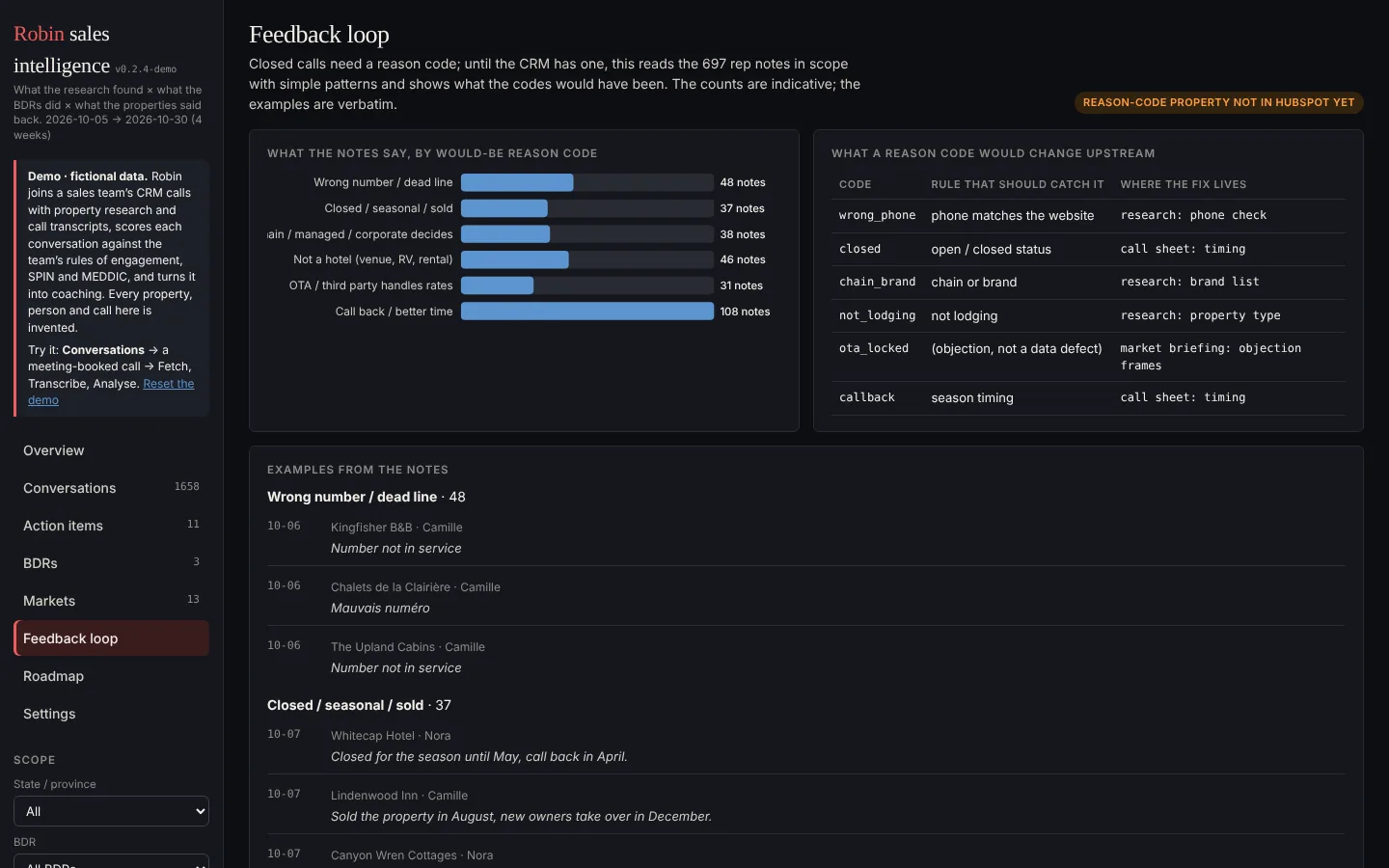
- Send defects upstream. Rep notes are read into would-be reason codes, and each code names the research rule or call-sheet field that should have caught it.
Six views, one question each
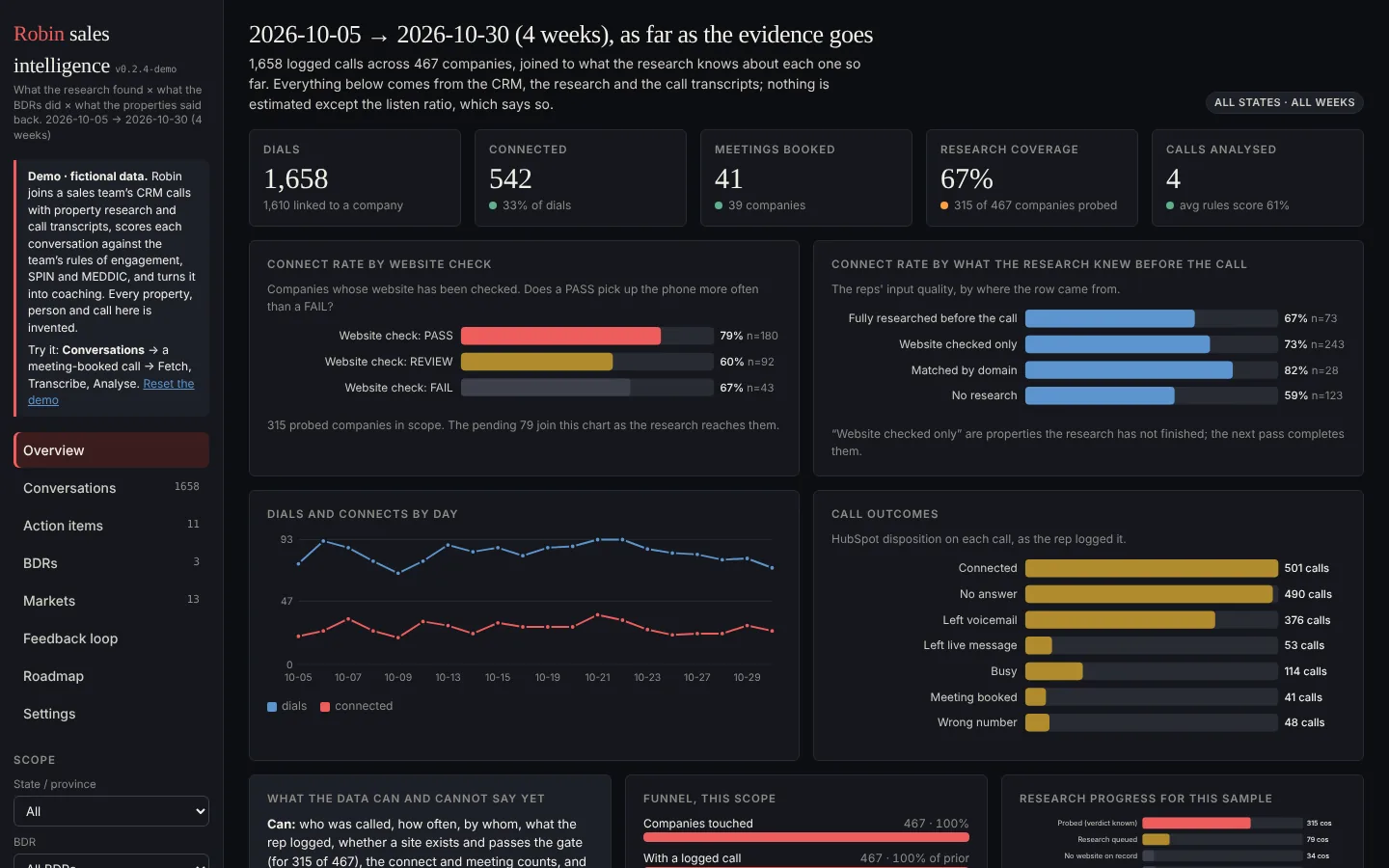
- OverviewDials, connects, meetings and research coverage, with connect rate by what the research knew.
- ConversationsEvery logged call; recorded ones can be fetched, transcribed and analysed in place.
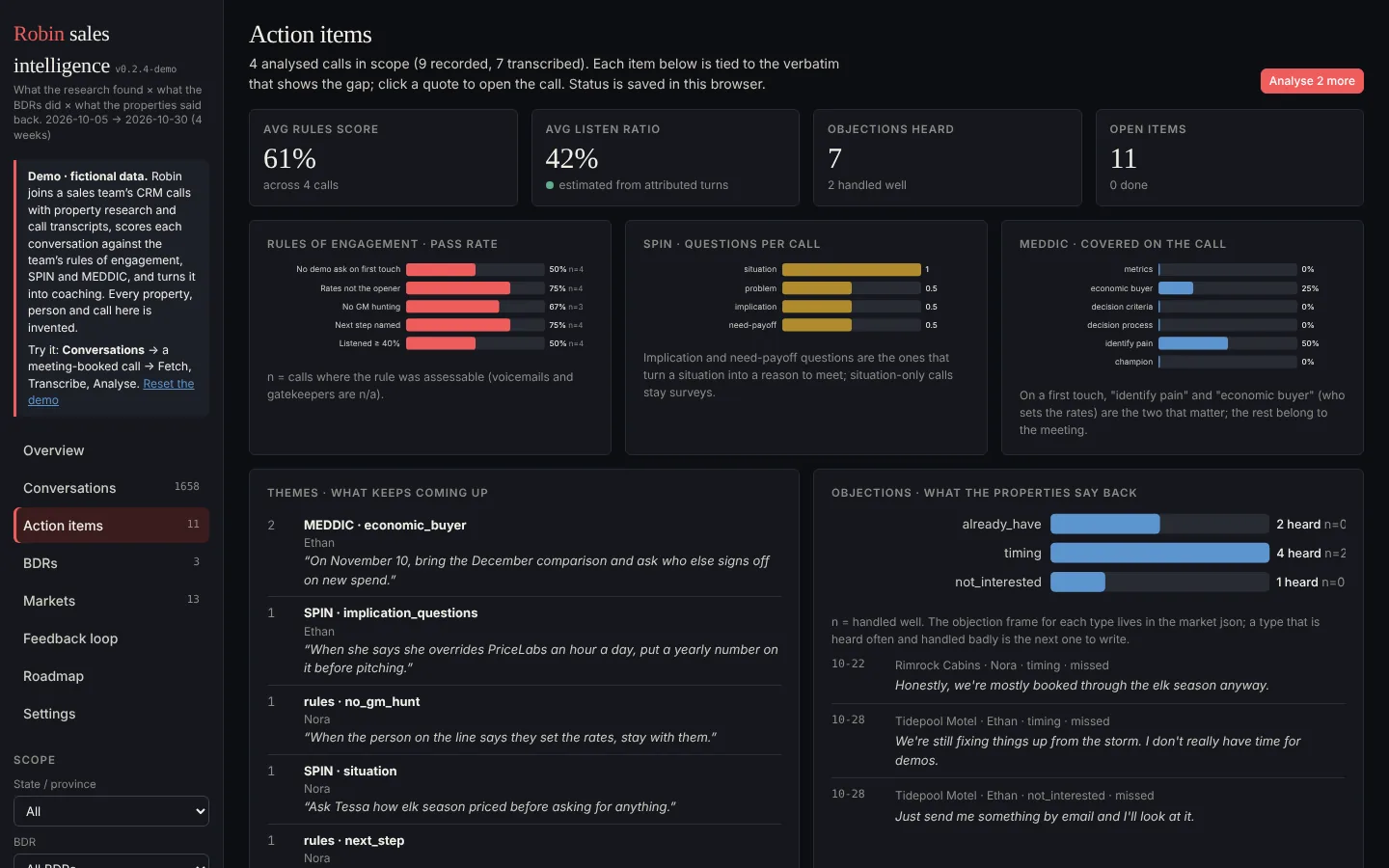
- Action itemsRules pass rates, SPIN, MEDDIC and coaching themes, each tied to a quote.
- BDRsActivity and habits per rep, with the sample size behind every score.
- MarketsThe same cuts by state and province, to plan where to call next.
- Feedback loopReason codes from rep notes, mapped to the upstream fix.
Every number says what it’s based on
A dashboard that overstates its evidence gets ignored the first time a manager catches it. Robin shows its sample size on every score (n=4 analysed calls means “early signal”, not a verdict), keeps a What is missing panel in the sidebar, and labels the one estimated figure, the listen ratio, as an estimate.
What changed
Robin sat on top of a bigger piece of work: turning a 50,000-record database into clear micro-segments, each with its ICP signals and the pain points to lead with. BDRs stopped dialling a flat list and started each call knowing what kind of property it was and why it might care.
The clearest result came from a new BDR, who went from 2 demos to 27 in three weeks with tailored messaging per segment and coaching tied to their own calls.